
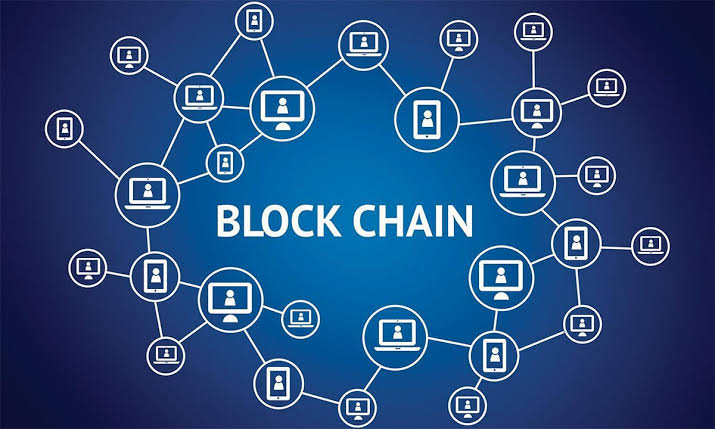
Behind the buzzwords and hype lies a groundbreaking innovation that has the potential to reshape how we conduct transactions, secure data, and establish trust in a digital landscape. In the realm of cutting-edge technologies, blockchain has emerged as a revolutionary concept that has captivated industries and individuals alike. At its core, blockchain is a decentralized, transparent, and immutable digital ledger that records transactions across multiple computers or nodes. Unlike traditional centralized systems, blockchain’s power lies in its distributed nature, where no single entity has control over the network.
Each transaction, or block, is cryptographically linked to the preceding block, forming a chain of information that is resistant to tampering or alteration. For instance, you have 10 people who stand in a line, if each person knows who will be right in front of him before they line up, they will have a very orderly line. Because everyone knows who will be in front of him, there will be no problem with positioning. Now if anyone other than these ten wants to force himself into this line then he cannot because he is unknown to those ten and none of them have his address/name. And if the address can never be changed then it can also be said that this line can never be broken. Since everyone knows who will be in front of him, he will not allow any stranger to enter in front of him. Here if we think of people as blocks and if we think of this line system as a chain where each block is connected then this is technically called blockchain, where every block is connected where it is almost impossible to break the connection.
Simply put, a blockchain is many blocks that are connected in a chain system. Here you can imagine a block as a digital file, notebook, or diary, that keeps track of important things, that is there is a lot of data in it and the important thing is that this block has the address of the previous block and its own address, but with some special powers. Instead of being owned by one person, this notebook or diary is shared by lots of people. They all work together to make sure the information inside is secure and accurate.
Blockchain, as the name suggests, is a chain of interlinked blocks. Only, in this instance, the blocks are a record of digital information and the chain linking it all is the public database on which this information exists. The information stored in these blocks generally ranges from transaction information, such as the amount spent, when and where, to details about the purchaser, etc. using a unique data signature. The data is only open for distribution but does not lend itself to being copied.
KEY PRINCIPLES OF BLOCKCHAIN
A. Data Structure: At its core, a blockchain consists of blocks of data. Each block contains a list of transactions or information. These blocks are linked together in a specific order, forming a chain of blocks.
B. Decentralization: Blockchain operates on a decentralized network of computers called nodes. Each node has a copy of the entire blockchain and participates in the verification and validation of transactions. The absence of a central authority ensures that no single entity controls the blockchain network, eliminating the risk of manipulation or censorship. This decentralized nature promotes transparency, security, and resilience. Therefore, no bossy-bossy syndrome in blockchain, there is no one person in charge. It’s a team effort where everyone has a say. This makes it fair and prevents one person from having too much power.
C. Transparency: Every transaction recorded on the blockchain is visible to all participants in real-time. This transparency allows anyone to view and audit the transaction history, fostering trust and accountability among users and minimizes the need for intermediaries or middlemen. Just like any time when someone wants to add something new to the digital notebook or diary, like a transaction, they write it on a page. But before it becomes permanent, all the team members have to agree that it’s correct. Once they agree, the page is added to the diary forever, and nobody can change it later.
D. Security: Blockchain is super secure and uses secret codes called cryptography to keep information safe. It’s like having a secret password that only the right people can understand. It utilizes advanced cryptographic algorithms to secure data and ensure the integrity of transactions. Each block contains a unique identifier called a hash, which is a digital fingerprint of the block’s data. These hashes are interconnected, creating a chain. Any change to the data in a block will result in a different hash, which would be immediately noticeable, ensuring the immutability of the blockchain. The immutability of blockchain makes it extremely difficult for malicious actors to alter past records, enhancing security and trust.
E. Consensus Mechanisms: Blockchain networks employ various consensus mechanisms to agree on the validity of transactions and maintain the integrity of the ledger. Various consensus algorithms, such as Proof-of-Work (PoW) and Proof-of-Stake (PoS), enable blockchain networks to agree on the validity of transactions and maintain consensus among participants. There are trustworthy transactions. When someone adds a new transaction to the diary, it’s like a digital handshake between the buyers and sellers. They can trust that the transaction is real and nobody is cheating.
F. Verification and Consensus: When a participant wants to add a new transaction to the blockchain, it broadcasts the transaction to the network. The nodes in the network verify the transaction’s validity by checking if the sender has sufficient funds and if the transaction adheres to the predefined rules of the blockchain.
APPLICATION OF BLOCKCHAIN

A. Cryptocurrencies: Have you heard of Bitcoin? It’s a digital currency that uses blockchain to keep track of who has how much money. It’s like having a digital piggy bank that you can use to buy things. The advent of blockchain gave birth to the revolutionary concept of cryptocurrencies, such as Bitcoin and Ethereum. These digital assets leverage blockchain technology to enable secure and decentralized peer-to-peer transactions.
B. Supply Chain Management: Blockchain can be used to track where things come from, like food or clothes. This helps make sure they’re made in a way that is good for the environment. Blockchain’s transparency and immutability make it ideal for enhancing supply chain traceability and authenticity. From food to luxury goods, blockchain can provide a comprehensive record of a product’s journey, ensuring its quality and origin.
C. Smart Contracts: Blockchain can create special contracts called smart contracts. They are like digital promises that automatically do what they say. No need for grown-ups to worry about complicated paperwork! Smart contracts are self-executing agreements with predefined rules and conditions. They automatically execute the terms of an agreement once the specified conditions are met, eliminating the need for intermediaries. Blockchain platforms, like Ethereum, enable the deployment of smart contracts, automating complex processes.
D. Identity Management: Blockchain has the potential to revolutionize identity management by providing individuals with self-sovereign identities. This empowers individuals to control their personal data, enhancing privacy and security.
Furthermore, Blockchain has a wide range of applications across various industries. Some notable applications include cryptocurrencies (e.g., Bitcoin), the medical sector, voting systems, decentralized finance (DeFi), and more. It has the potential to revolutionize many aspects of our society by enhancing security, transparency, and efficiency in various processes.
THE NEXUS BETWEEN BLOCKCHAIN AND BYZANTINE GENERALS’ PROBLEM
The Byzantine Generals’ Problem refers to a hypothetical scenario where a group of Byzantine generals, each commanding a portion of their army, must coordinate their actions to either attack or retreat from a common enemy. However, the challenge lies in the fact that some of the generals may be traitors who aim to sabotage the mission by sending conflicting or false orders.
The problem arises from the need for consensus among the loyal generals to make a unified decision while accounting for the potential presence of traitors. The generals can only communicate by sending messages to each other, and they must come to an agreement on a common plan of action. The difficulty lies in distinguishing between reliable messages from loyal generals and deceptive messages from traitors.
The Byzantine Generals’ Problem is often used as an analogy in the field of distributed computing and blockchain technology. It highlights the challenge of achieving consensus in a network of computers where some nodes may be faulty, compromised, or intentionally malicious. By developing consensus algorithms and protocols, such as the Proof-of-Work mechanism used in Bitcoin, blockchain technology addresses this problem and ensures agreement on the state of the network and the validity of transactions.
In the realm of blockchains, tackling the Byzantine Generals Problem involves achieving network consensus even in the face of numerous malicious actors attempting to exploit the system and the possibility of certain network components experiencing downtime or malfunction.
HOW IT WORKS

Blockchain’s solution to the Byzantine Generals’ Problem is like solving a super cool puzzle! Imagine a bunch of friends trying to make a decision, but there’s a sneaky troublemaker among them who might spread false information. To tackle this, the blockchain says, “Hey, if you want to share information, you gotta solve this mind-boggling puzzle first!”
This puzzle is no ordinary puzzle—it’s super complex and requires a lot of brainpower to crack. But here’s the twist: once you solve it, it’s easy for everyone else to check if you did it correctly. It’s like having a secret code where it’s hard to create but easy to verify. This is different from the kind of codes used in things like encrypted messages, where they’re easy to create but hard to crack.
Now, imagine all these puzzles being linked together, forming a chain of blocks. Each block contains a special code that connects it to the previous block, ensuring everything stays in order. All these blocks together make up the blockchain.
But where is this blockchain stored? Well, it’s not in one place—it’s spread out among lots of computers called “full nodes.” Each full node has a copy of the entire blockchain, along with the rules that make it valid. So if you want information from the blockchain, you can ask any of these computers.

Here’s the awesome part: if some of these computers disagree about what the correct blockchain looks like, there’s a clever rule to decide which one to trust. Everyone goes for the longest valid blockchain—the one that requires the most brainpower to create. Honest computers are always on the lookout for this longest chain and will switch to it when they find it. Sometimes, there may be multiple chains with the same length, but don’t worry, more blocks will be added, and the true chain will become clear.
But wait, not everyone can create a block because it takes a ton of computing power and time. So people who want to add their transactions to the blockchain put them in a waiting area called the “unconfirmed transactions pool.” Professional block creators, called miners, come in and snatch these transactions, cramming as many as they can into a block. When they finally solve the puzzle and create a valid block, they share it with all the other computers, which happily add it to the blockchain after double-checking its validity.
Oh, and guess what? Miners get rewarded for their hard work! They receive a special treat from the system and sometimes even a fee from the people whose transactions they included. It’s like a win-win situation.
Now, why does all this work? Well, the idea is that there are more honest people participating in the blockchain than mischievous troublemakers. It’s all about effort, which also means money, because solving those puzzles requires electricity and fancy hardware. Plus, each person involved has their own special keys—a public key for others to see what they’ve contributed and a private key for creating secure transactions. This way, even if a sneaky person controls most of the computing power, their influence is limited. They can mess with recent transactions or block new ones, but they can’t steal money from other people without knowing their private keys.
By setting up these clever incentives, blockchain becomes an incredibly reliable and trustworthy system. It keeps everyone honest and ensures that no one can successfully attack it. So far, no one has been able to crack it. Pretty cool, right?
CHALLENGES AND FUTURE DIRECTIONS
While blockchain holds immense promise, it also faces challenges that need to be addressed for widespread adoption. Scalability, energy consumption, and regulatory frameworks are among the hurdles that the technology must overcome. However, ongoing research and development efforts aim to tackle these obstacles and propel blockchain into the future.
CONCLUSION
Blockchain technology has ushered in a new era of decentralized systems and transparent transactions. With its potential to disrupt various industries and empower individuals, blockchain holds immense promise for the future. As we continue to explore the possibilities and address the challenges, it is clear that blockchain will shape the way we conduct business, secure data, and establish trust in the digital age.


